Call: 07971670813
 Send Inquiry
 Send Inquiry
Dolomite Powder
Dolomite Powder Specification
- Water Absorption
- <1%
- Density
- 2.9 Gram per cubic centimeter(g/cm3)
- Form
- Powder
- Usage & Applications
- Used in paint, rubber, ceramics, glass, agriculture, construction, detergent
- Chemical Composition
- CaCO3: ~54%, MgCO3: ~45%, SiO2: <1%
- Melting Point
- >800C (approx.)
- Application
- Paint, Detergent, Ceramic, Glass, Rubber, Construction, Agriculture
- Hardness (%)
- 3.5 4 (Mohs scale)
- Surface Finish
- Smooth, Fine Powder
- Purity(%)
- 90% 99%
- Product Type
- Industrial Mineral Powder
- Types of Refractories
- Basic Refractory
- Shape
- Powder
- Porosity
- Low to Medium
- Dimensional Stability
- Excellent
- Specific Gravity
- 2.85 - 2.90
- Thermal Conductivity
- Low
- Color
- White to Off-White
- PH Value
- 8.5 - 9.5
- Solubility
- Insoluble in water, soluble in acid
- Reactivity with Acids
- Reacts with strong acids to release CO2 gas
- Particle Size
- 200 to 400 mesh (customizable)
- Moisture Content
- Less than 0.5%
- Shelf Life
- Indefinite under recommended storage
- Oil Absorption
- Low
- Storage Condition
- Store in cool, dry place
- Packaging
- 25 kg / 50 kg HDPE bags or as required
- Bulk Density
- 900 - 1500 kg/m3
- Whiteness
- 92% min.
About Dolomite Powder
Dolomite Powder is a double carbonate of magnesium & calcium having white colored appearance. It is widely utilized as a chief refractory material for furnace linings and in manufacturing of refractory bricks as well. In blast furnaces, it is used as a fluxing agent. By reacting calcined dolomite with sea water, magnesite can be produced. It has very high melting temperature of about 900 degrees Celsius. When used in furnaces or ladle, this compound can withstand temperature as high as 1700 degrees Celsius. Dolomite Powder is generally applied as outer lining in refractories for having low thermal conductivity.
Exceptional Chemical and Physical Properties
Dolomite Powder features a stable chemical structure, mainly comprising CaCO3 (54%) and MgCO3 (45%), with trace silica. Its smooth, fine powder form and low water absorption (<1%) ensure excellent surface finish and compatibility in industrial formulations. Low bulk density (9001500 kg/m) and high purity result in optimal performance for specialized uses.
Versatile Industrial Applications
This powder is widely used as a key ingredient in manufacturing paints, ceramics, glass, rubber, detergents, and construction materials. Its unique properties, like excellent whiteness and low oil absorption, make it a preferred choice. Dolomite Powder also enhances agricultural practices, offering essential nutrients to the soil.
FAQs of Dolomite Powder:
Q: What is the recommended storage condition for Dolomite Powder?
A: Dolomite Powder should be stored in a cool, dry place, away from moisture and direct sunlight. Proper storage in sealed HDPE bags helps preserve its quality and ensures an indefinite shelf life.Q: How is Dolomite Powder typically used across different industries?
A: Dolomite Powder is used in the production of paints, ceramics, glass, rubber, construction materials, detergents, and also in agriculture. Its smooth texture, whiteness, and chemical stability make it suitable for improving product quality in these fields.Q: When does Dolomite Powder show reactivity with acids, and what is the outcome?
A: Dolomite Powder reacts with strong acids, resulting in the release of carbon dioxide (CO2) gas. This property is particularly considered in applications where acid resistance or chemical reactivity is involved.Q: What advantages does low oil absorption and high whiteness provide in applications?
A: Low oil absorption enhances Dolomite Powders performance in paints, coatings, and rubber by improving dispersion and minimizing binder usage. High whiteness (92% min.) contributes to bright, pure color in finished products.Q: Where is this Dolomite Powder sourced and supplied from?
A: Our Dolomite Powder is manufactured and supplied in India, catering to both domestic and international markets for a range of industries.Q: How should Dolomite Powder be handled during the application process?
A: Ensure the powder is handled in well-ventilated areas with suitable protective equipment to avoid inhalation. Use it as per the application requirements, blending with other raw materials as directed for specific end-use.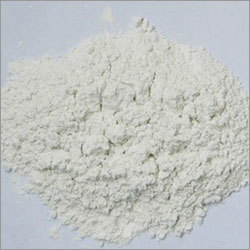
Tell us about your requirement

Price:
Quantity
Select Unit
- 50
- 100
- 200
- 250
- 500
- 1000+
Additional detail
Mobile number
Email


Contact Details
VAGRECHA PLAST CHEM
GST : 08AFTPV2413C1ZC
- B No - 25, Glass Factory Arvind Nagar, Girwa,Udaipur - 313001, Rajasthan, India
- Phone :07971670813
 Send Inquiry
Developed and Managed by Infocom Network Private Limited.
