Call: 07971670813
 Send Inquiry
 Send Inquiry
Washed China Clay
Washed China Clay Specification
- Chemical Composition
- Al2O3, SiO2, Fe2O3, TiO2
- Purity(%)
- 90% - 99%
- Melting Point
- 1785°C
- Application
- Ceramics, Paper, Paint, Rubber, Plastics Industries
- Usage & Applications
- Used in ceramics, cosmetics, paper, paint and as a filler in rubber and plastics
- Form
- Powdered
- Hardness (%)
- Mohs scale 2 - 2.5
- Water Absorption
- 0.5% - 1.5%
- Density
- 2.54 Gram per cubic centimeter(g/cm3)
- Surface Finish
- Smooth
- Product Type
- Mineral / Industrial Raw Material
- Types of Refractories
- Acidic Refractory
- Shape
- Powder
- Porosity
- Low
- Dimensional Stability
- Excellent
- Strength
- High mechanical strength
- Specific Gravity
- 2.6
- Thermal Conductivity
- Low
- Color
- White
- Brightness
- 80% - 92%
- Moisture Content
- Less than 0.5%
- pH Value
- 6.0 - 7.5
- Particle Size
- Below 45 microns
- Oil Absorption
- 30 - 40%
About Washed China Clay
Washed China Clay is produced by a serried of steps including de-gritting, solid-liquid separation, filtering, and drying. Before processing, it is mixed in water to create pure white slurry. This clay is extensively utilized in cosmetic, pharmaceutical, ceramic, paint, and rubber industries. It can also serve as filler in paper making industry and for electrophoresis coating purposes. China clay is inert to various acids & alkalis and shows great anticorrosive properties. Also known as kaolin, Washed China Clay has neutral pH, easy dispersibility, improved rheology, low hardness to prevent machine wear, and increased brightness.
Superior Physical and Chemical Properties
Our Washed China Clay features a smooth powder form with a brightness range of 80% to 92%, low water absorption, and high purity (90%-99%). Its excellent dimensional stability and low porosity support advanced applications, while the low moisture content ensures ease of handling and consistent formulation in industrial processes.
Ideal for Industrial Applications
Widely utilized in ceramics, paper, paint, rubber, and plastics, Washed China Clay enhances material performance by improving whiteness, mechanical strength, and surface finish. Its low oil absorption and chemical stability make it suitable as a filler for both technical and aesthetic requirements across industries.
FAQs of Washed China Clay:
Q: How is Washed China Clay processed before reaching industrial applications?
A: Washed China Clay undergoes beneficiation processes that include washing, refinement, and particle size separation. This guarantees a high-purity powder with minimal impurities, providing consistent quality suitable for ceramics, paper, paint, rubber, and plastics manufacturing.Q: What are the key benefits of adding Washed China Clay to ceramics and plastics?
A: The clay enhances product brightness, improves mechanical strength, and offers a smooth surface finish. Its low water absorption and dimensional stability also prevent warping and ensure high-quality end results in ceramics and plastics.Q: Where is this Washed China Clay primarily supplied and manufactured?
A: This product is primarily manufactured and supplied in India, ensuring access to high-purity, industrial-grade clay for domestic and international markets.Q: When is Washed China Clay used in the production process of paper and paint?
A: In paper manufacturing, it is added during the coating and filling stages to improve whiteness and printability. For paints, it is incorporated as a filler and extender to enhance consistency, coverage, and optical properties.Q: What sets this Washed China Clay apart in terms of chemical composition?
A: The clay contains a balanced mix of Al2O3, SiO2, Fe2O3, and TiO2, providing optimal acid-resistant and refractory properties. Its high purity (up to 99%) and low iron content make it suitable for demanding technical applications.Q: How does the low thermal conductivity of Washed China Clay benefit industrial applications?
A: Low thermal conductivity contributes to its effectiveness as an insulator in ceramics and refractories, protecting materials from rapid temperature changes and enhancing energy efficiency.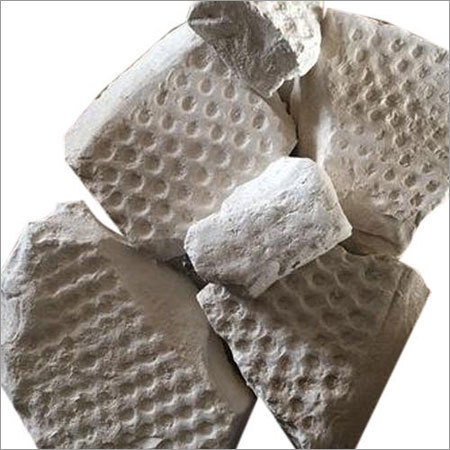
Tell us about your requirement

Price:
Quantity
Select Unit
- 50
- 100
- 200
- 250
- 500
- 1000+
Additional detail
Mobile number
Email


Contact Details
VAGRECHA PLAST CHEM
GST : 08AFTPV2413C1ZC
- B No - 25, Glass Factory Arvind Nagar, Girwa,Udaipur - 313001, Rajasthan, India
- Phone :07971670813
 Send Inquiry
Developed and Managed by Infocom Network Private Limited.
